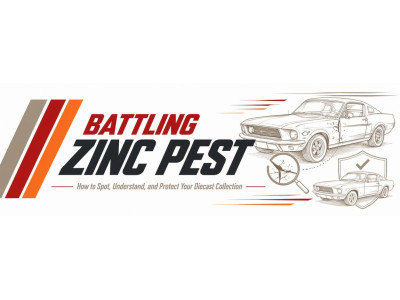
For diecast model car collectors, few problems are more worrying than zinc pest, also known as zinc rot. It is an irreversible deterioration process that can damage a prized metal scale model over time, causing swelling, cracking, warping and, in severe cases, crumbling metal.
Zinc pest is especially important to understand if you collect older diecast models, vintage miniatures or long-term display pieces. Whether you collect 1:43 scale model cars or larger 1:18 scale model cars, knowing the warning signs can help you inspect models before buying and protect the rest of your collection.
If you are comparing different model materials, you may also want to read our guide: Diecast vs. Resin Scale Models.
Quick Zinc Pest Inspection Checklist
- Check door gaps, hood lines and fender edges for swelling or poor alignment.
- Look for spiderweb paint cracks, especially around panel edges and curved body areas.
- Inspect the underside and unpainted metal parts for white or grey powdery residue.
- Compare the model with older photos if possible to spot warping or body distortion.
- Keep affected models away from the main display cabinet and reduce humidity exposure.
What Exactly Is Zinc Pest?
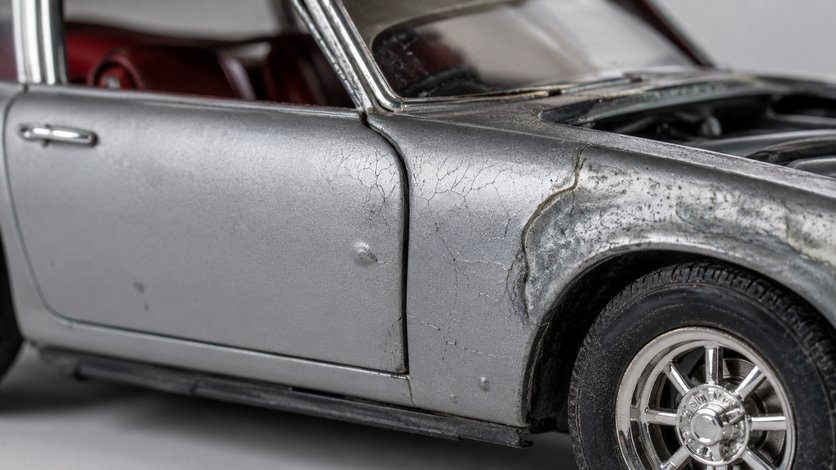 Zinc pest is a type of deterioration that can occur inside zinc alloy castings, especially in older diecast models made from Zamak or similar zinc-based alloys. These alloys usually contain zinc, aluminium, magnesium and copper.
If the alloy contains unwanted impurities, such as lead, tin or cadmium, the internal metal structure can become unstable over time. Moisture and poor storage conditions may accelerate the process. As the metal structure expands and breaks down from within, the model can begin to swell, crack, warp or crumble.
This is one of the reasons why careful storage is important for long-term collectors. For general model selection and collecting basics, see our beginner guide: How to Choose Your First Scale Model Car.
How to Spot Early Warning Signs
Zinc pest does not usually appear overnight. It is a slow process that may show subtle warning signs before severe structural damage occurs. Inspect your models regularly for these symptoms:
- Out-of-scale body swelling: The model’s doors, hood or fenders may stop aligning properly or begin to fit tightly in their shut lines. This can happen when the corroding alloy physically expands.
- Spiderweb paint cracks: Fine hairline cracks may appear in the paintwork, especially around panel edges or curved body surfaces.
- Metal bubbling: Small hard blisters may form beneath the paint surface. Unlike ordinary paint rash, these bubbles may feel solid because they are pushed outward by expanding metal.
- White powdery residue: A fine white or grey powder may appear around the chassis, interior seams, door gaps or unpainted zinc areas.
Zinc Pest vs. Paint Rash: What Is the Difference?
Zinc pest and paint rash can look similar at first, but they are not the same problem. Paint rash usually affects the paint surface, while zinc pest comes from inside the metal alloy.
If the issue is limited to surface marks, the problem may be cosmetic. If the body panels are swelling, warping, cracking or losing alignment, the problem may be more serious than ordinary paint defects.
A useful rule for collectors: surface marks may be cosmetic, but panel distortion, tight shut lines, cracking metal or powdery residue can indicate structural alloy degradation.
Prevention and Protection Strategies
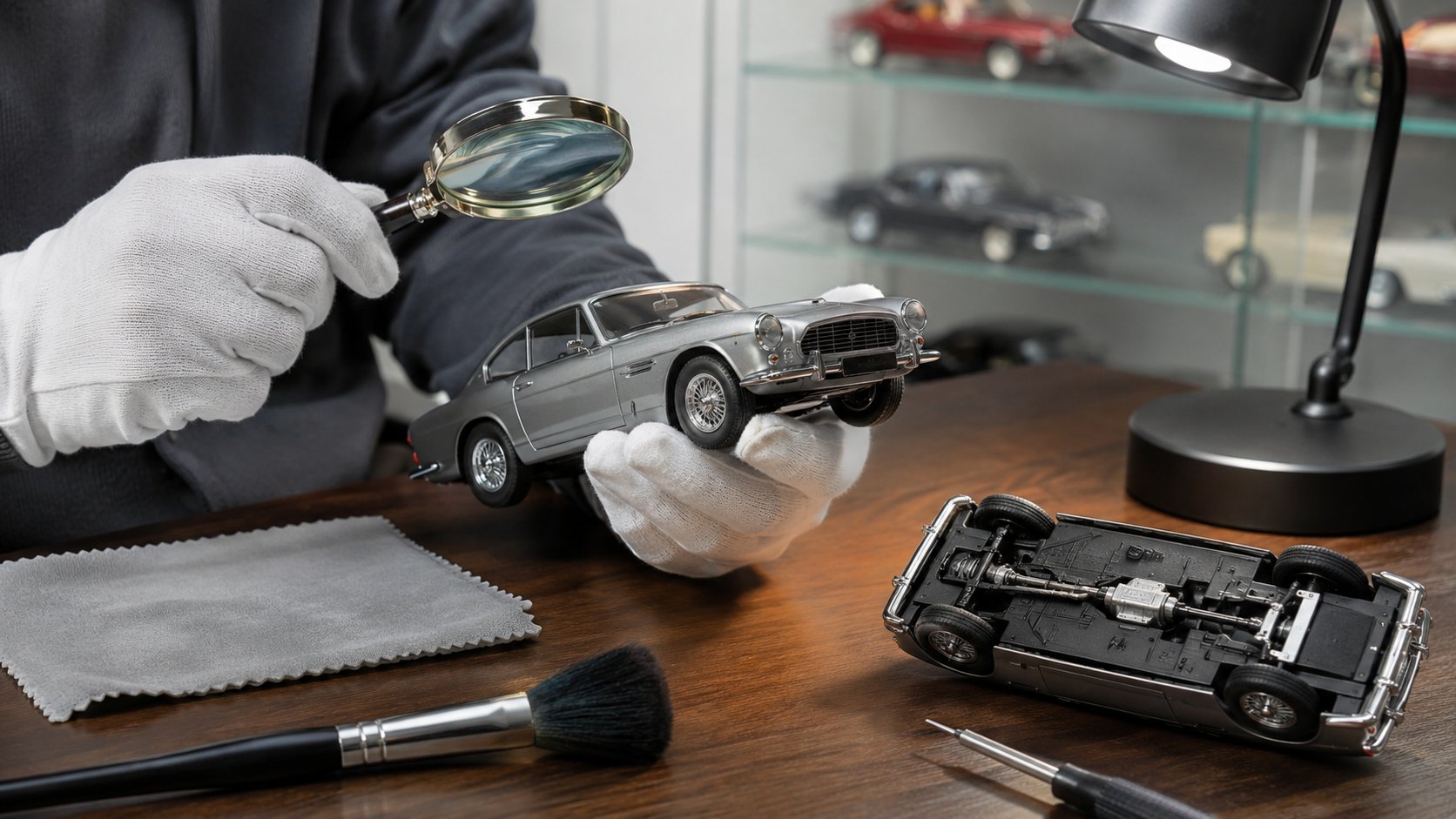
Can zinc pest be cured once it starts? No. There is no reliable chemical treatment, glue or solder repair that can reverse internal zinc alloy deterioration. However, good storage conditions may reduce stress on vulnerable models and help protect the rest of your collection.
 1. Strict Climate Control
Humidity is one of the key risk factors for zinc pest. Keep your display cabinets in a dry room and avoid damp basements, uninsulated garages or areas near humidifiers.
For long-term display, collectors often aim for stable indoor conditions with moderate humidity. A dry, temperature-stable environment is safer for both diecast model cars and resin display pieces.
2. Temperature Stability
Extreme temperature changes can accelerate stress in materials. Avoid displaying scale models in direct sunlight, next to heating radiators or under hot halogen display lights. Cool LED cabinet lighting is usually a safer choice.
Temperature control is also important for resin models, which may be more vulnerable to body warping under excessive heat. You can compare material risks in our diecast vs. resin guide.
3. Immediate Isolation
Zinc pest is not contagious like a biological infection, but an affected model should still be isolated. Cracked metal can expose unstable surfaces, release dust and create a poor environment inside a closed display case.
If a model starts crumbling, remove it from the main display cabinet and inspect nearby models carefully.
Zinc Pest Degradation Stages
| Stage of Degradation | Visual Symptoms | Can It Be Saved? | Recommended Action |
|---|---|---|---|
| Stage 1: Early signs | Tight panel lines, small paint cracks, early bubbling or slight misalignment | Highly unlikely | Move to low-humidity storage and monitor closely |
| Stage 2: Advanced damage | Deep body cracks, warped panels, visible swelling or severe alignment issues | No | Remove from the main display cabinet |
| Stage 3: Terminal damage | Metal crumbles upon touch or breaks apart | No | Salvage plastic parts, wheels or accessories if possible |
What to Ask Before Buying a Vintage Diecast Model
When buying older model cars on the secondary market, do not rely only on distant photos. Ask for clear close-up images and check the model carefully before purchasing.
- Ask for close-up photos of door gaps, hood edges, fenders and the underside.
- Check whether the model has been stored in a dry, temperature-stable environment.
- Look for signs of swollen body panels, cracked paint, warped parts or powdery residue.
- Ask whether the model has ever been repaired, repainted or stored outside its box.
- Be cautious with listings that only show distant photos or do not show the underside.
This is especially important for collectors buying older 1:18 scale models, because their larger bodies make warping and panel misalignment easier to notice. Compact 1:43 models should also be inspected carefully, especially around the baseplate and wheel arches.
How to Store Diecast Models Safely
Good storage cannot repair zinc pest, but it can help preserve healthy models and reduce environmental stress. Keep models in a dry, clean and stable display area. Avoid strong sunlight, high heat, excessive humidity and dusty open shelves. For more practical storage and display tips, read our guide: How to Store and Display Scale Model Cars Safely.
Original boxes and display cases can also help protect models during storage or shipping. If you order collectible models online, careful packaging is important. You can read more about shipping and parcel handling here: Delivery Rules.
Final Collectors' Advice
Do not panic. Zinc pest is a serious issue, but not every diecast model is at risk. Many modern diecast models are produced with better quality control and more stable materials than older production runs.
When buying older or vintage models, always request macro close-up photos of the door gaps, chassis plate, wheel arches and hood edges. These areas can reveal early warning signs before the damage becomes obvious.
If you are starting or expanding a collection, browse current models here: Scale Model Cars. You may also find useful collections such as Soviet Scale Model Cars.
18/06/2026