Collectible scale model cars are made for display, but they also need careful storage. Dust, sunlight, humidity, heat and poor handling can slowly damage paint, decals, chrome parts, rubber tyres, display cases and original packaging.
Whether you collect larger 1:18 scale model cars or compact 1:43 scale model cars, proper storage helps protect the look, condition and long-term collector value of your models.
This guide explains how to store and display scale model cars safely, including display cabinets, humidity control, sunlight protection, cleaning, original boxes and long-term preservation. You can browse current collectible models here: Scale Model Cars.
Why safe storage matters
Scale model cars often include small and delicate parts. Mirrors, antennas, wipers, lights, photo-etched details, decals, windows, tyres and display cases can be damaged by rough handling or poor storage conditions.
Even if a model is not handled often, the environment around it still matters. Direct sunlight can fade paint. Dust can build up in panel gaps and around windows. High humidity can affect packaging, metal parts and decals. Excessive heat can damage resin bodies, tyre materials and glue.
Good storage is not only about keeping models clean. It also helps protect the condition that collectors care about.
Choose the right display location
The first step is choosing where your collection will be displayed. A safe display location should be dry, clean and stable. Avoid places where the model will be exposed to direct sunlight, strong heat, moisture or frequent vibration.
Avoid displaying scale model cars:
- on windowsills with direct sunlight;
- near radiators, heaters or fireplaces;
- in damp basements or garages;
- near humidifiers or air conditioning outlets;
- on unstable shelves;
- where pets or small children can easily reach them.
A stable shelf, glass cabinet or enclosed display case in a normal indoor room is usually the safest choice.
Use a display cabinet or display case
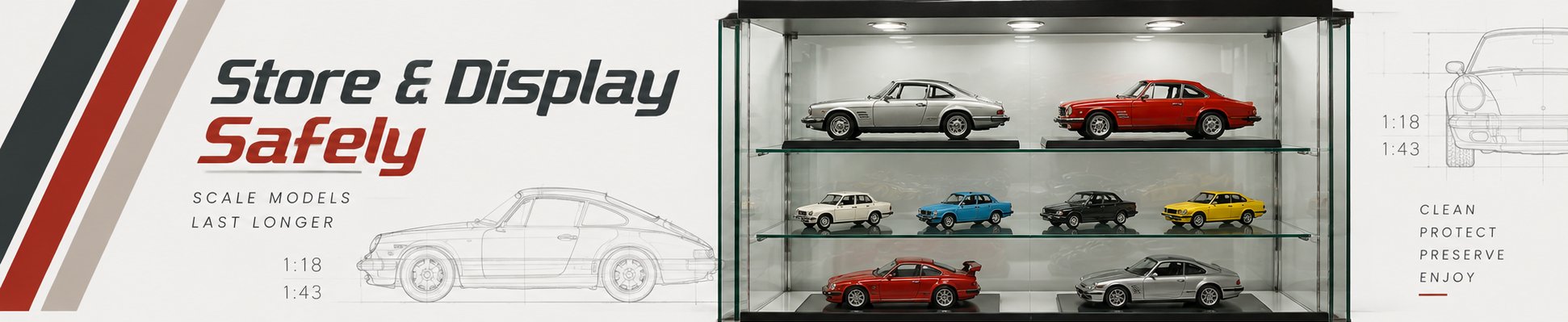
A display cabinet is one of the best ways to protect scale model cars while keeping them visible. It helps reduce dust, accidental contact and exposure to room conditions.
Glass cabinets work especially well for larger collections. They keep the models visible from different angles and make the collection look organized. Acrylic display cases are also useful for single models or smaller displays.
For larger 1:18 models, make sure the shelf depth is sufficient and the glass shelf can support the weight. For smaller 1:43 models, a display cabinet allows many models to be arranged in rows or themed groups.
Control dust
Dust is one of the most common problems for displayed model cars. It collects on paint, windows, wheels, grilles and interior openings. Over time, dust can make models look dull and may be difficult to remove from small details.
To reduce dust:
- use a closed display cabinet where possible;
- keep models away from open windows and air vents;
- avoid displaying models directly on open shelves in dusty rooms;
- clean shelves and display cases regularly;
- use a soft brush or microfiber cloth for gentle dust removal.
Do not use rough cloths, paper towels or aggressive cleaning products on painted surfaces. These can scratch paint, decals or clear plastic windows.
Avoid direct sunlight
Direct sunlight can damage scale model cars over time. Paint may fade, decals may lose colour, plastic parts may become brittle and interiors may discolor. Sunlight can also heat up display cases and create temperature stress.
If your display cabinet is near a window, use curtains, blinds or UV-filtering film to reduce exposure. The safest approach is to keep valuable models away from direct sunlight completely.
This is especially important for resin models, older diecast models, models with delicate decals and models in acrylic display cases.
Manage humidity
Humidity is important for long-term model car storage. A room that is too damp can affect cardboard boxes, paper inserts, decals and metal parts. Very high humidity may also contribute to corrosion risks in some diecast models.
For most collections, a dry and stable indoor environment is best. Many collectors use a small digital hygrometer inside or near the display cabinet to monitor humidity.
To reduce humidity risks:
- avoid damp basements and garages;
- keep the collection away from humidifiers;
- use silica gel packets carefully where appropriate;
- check boxes and paper inserts for signs of moisture;
- keep display cabinets in rooms with stable indoor conditions.
If you collect diecast models, humidity control is especially relevant because unstable zinc alloy can be vulnerable to deterioration. Read more here: Battling Zinc Pest: How to Spot, Understand and Protect Your Diecast Collection.
Keep temperature stable
Scale model cars do not like extreme temperature changes. Excessive heat can soften glue, affect tyres, distort plastic parts and cause resin bodies to warp. Cold and damp storage can also damage packaging and create condensation risks.
Avoid storing or displaying models in:
- unheated garages;
- attics with strong temperature changes;
- cars or vans for long periods;
- storage rooms with poor climate control;
- display cases under hot lamps.
Cool LED lighting is usually safer than hot halogen lighting for display cabinets.
Protect original boxes and packaging
Original boxes are part of the collecting experience. They protect models during storage, shipping and moving. For many collectors, the original box, display base, acrylic case, certificates and inserts can also affect collector value.
Even if you display the model outside the box, keep the packaging in a dry and clean place. Avoid crushing boxes, stacking too much weight on them or storing them in damp rooms.
When moving models, use the original packaging whenever possible. This is especially important for fragile resin models, models with mirrors or antennas and models with delicate display bases.
Handle models carefully
Many scale model cars are collectible display items, not toys. They may contain small parts and delicate details that can break easily if handled roughly.
Safe handling tips:
- wash and dry your hands before handling models;
- hold the model by stable body areas, not mirrors or spoilers;
- use cotton gloves for valuable or high-gloss models;
- avoid touching decals, chrome trim and clear windows unnecessarily;
- place models on a soft cloth when inspecting them.
If you are new to collecting, read our beginner guide: How to Choose Your First Scale Model Car.
Clean models gently
Cleaning should be careful and minimal. The goal is to remove dust without damaging paint, decals or small parts.
Recommended cleaning tools:
- soft detailing brush;
- clean microfiber cloth;
- camera air blower;
- cotton gloves;
- soft cloth for the working surface.
Avoid strong chemicals, alcohol, abrasive polish and rough cloths unless you are certain they are safe for the model’s material and finish. Be especially careful around decals, photo-etched parts, clear plastic windows and chrome-effect details.
Display by theme
A well-organized display makes a collection easier to enjoy. Instead of placing models randomly, consider grouping them by scale, brand, country, manufacturer, material or vehicle type.
Common display themes include:
- 1:18 models as large centerpiece cars;
- 1:43 models arranged by brand or era;
- diecast and resin models separated by material;
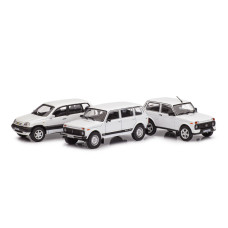
- Soviet, Lada and VAZ collections;
- sports cars, off-road vehicles or classic cars;
- limited editions or rare models in separate display cases.
Useful related collections:
Consider scale when planning your display
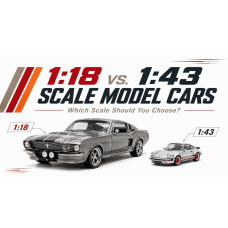
Scale affects not only the model’s size, but also how you display the collection.
1:18 scale model cars are larger and need more space. They are ideal for display impact, detailed viewing and centerpiece models.
1:43 scale model cars are smaller and more practical for larger collections. They allow collectors to display more vehicles in the same cabinet or shelf area.
If you are deciding between these two scales, read our comparison guide: 1:18 vs 1:43 Scale Model Cars.
Store models safely during shipping or moving
If you need to move your collection, pack each model carefully. Small parts can break easily during transportation, and display cases can crack if they are not protected.
Use the original box whenever possible. Add soft protective material around the display case or model box, and avoid leaving loose space inside the outer shipping box.
At 18-43.com, careful packaging is an important part of shipping collectible model cars. You can learn more here: Delivery Rules.

Storage checklist for collectors
| Storage factor | Best practice |
|---|---|
| Dust | Use closed cabinets or display cases and clean gently with a soft brush. |
| Sunlight | Keep models away from direct sunlight to reduce fading and heat stress. |
| Humidity | Store models in a dry indoor room and avoid damp basements or garages. |
| Temperature | Avoid strong heat, cold storage and frequent temperature changes. |
| Packaging | Keep original boxes, inserts, display bases and acrylic cases where possible. |
| Handling | Handle models carefully and avoid touching small fragile parts. |
Common storage mistakes
Collectors can avoid many problems by preventing a few common mistakes.
- placing models in direct sunlight;
- storing boxes in damp rooms;
- using hot display lights;
- cleaning with rough cloths or strong chemicals;
- throwing away original boxes too early;
- overcrowding display shelves;
- handling models by mirrors, spoilers or antennas.
Final advice
Good storage helps preserve the condition, appearance and collector value of scale model cars. A clean display cabinet, stable indoor conditions, careful handling and proper packaging can make a major difference over time.
If you collect larger display pieces, plan enough space for 1:18 scale model cars. If you want to build a broader collection, 1:43 scale model cars may be easier to display in quantity.
Whether you collect diecast, resin, Soviet, Lada, VAZ, classic or modern cars, safe storage is part of responsible collecting.
Browse current models here: 18-43.com Scale Model Cars.
25/06/2026