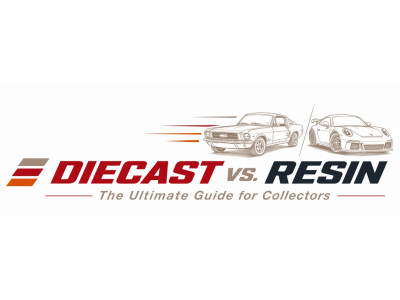
One of the most frequently discussed topics in the scale model community is the choice of body material: diecast metal vs. polyurethane resin. Whether you collect compact 1:43 scale model cars or larger 1:18 scale model cars, understanding how these materials differ can help you choose models that match your display style, handling preferences and long-term collecting goals.
This practical guide compares diecast and resin scale models, including manufacturing, body sharpness, functionality, weight, durability risks and collector value. If you are just starting your collection, you may also find our beginner guide useful: How to Choose Your First Scale Model Car.
You can browse current collectible models here: Scale Model Cars.
The Material Breakdown
1. Manufacturing and Body Sharpness
- Diecast Metal: Diecast model cars are usually made by forcing molten zinc alloy, often called Zamak, under high pressure into steel molds. Because steel molds are durable and suitable for repeated production, diecast models are often used for larger production runs. Diecast lines can be clean and consistent, but metal usually cannot reproduce extremely thin or ultra-sharp body panel edges as easily as resin.
- Resin Models: Resin models are made using liquid resin poured into softer molds. Resin can capture small surface details, complex shapes and sharp body creases very well. This makes resin useful for rare cars, limited editions, concept cars, niche variants and vehicles with complex aerodynamic details.
If your main priority is visual accuracy and sharp body shape, resin can be very attractive. If you prefer a traditional collectible feel and stronger structure, diecast may be the better choice.
2. Functionality and Opening Parts
- Diecast Metal: Diecast is usually the stronger choice for functionality. Many diecast models can include opening doors, hoods, trunks, steerable wheels or even functioning suspension details, depending on scale and manufacturer. This is one reason why many collectors enjoy larger 1:18 diecast model cars.
- Resin Models: Resin models are often sealed display pieces. This means the doors, hood and trunk usually do not open. The focus is more on exterior shape, paint finish, proportions and limited-production subjects.
If you enjoy inspecting engine details, interior details and opening parts, diecast is usually more satisfying. If you prefer a clean display model with accurate exterior proportions, resin can be an excellent option.
3. Weight and Tactile Feel
- Diecast Metal: Diecast models usually feel heavier in the hand. This weight gives many collectors a sense of durability and premium value. A large 1:18 diecast car or truck can feel especially substantial on a display shelf.
- Resin Models: Resin models are much lighter. Some high-end brands add internal weight to improve the feel, but resin will usually not have the same heavy metal presence as diecast.
Weight does not automatically mean quality, but it does affect how the model feels when handled and displayed.
Head-to-Head Comparison Matrix
| Feature | Diecast Metal Models | Polyurethane Resin Models |
|---|---|---|
| Functionality | May include opening doors, hood, trunk, steering or suspension details | Usually sealed body shell for static display |
| Panel Line Sharpness | Clean but often slightly rounded edges | Very sharp body lines and fine exterior details |
| Production Volumes | Often suitable for larger production runs | Often used for smaller or limited runs |
| Weight | Naturally heavier and more tactile | Lightweight, sometimes with added internal weight |
| Long-Term Risk | Rare risk of zinc pest if the alloy is unstable | Risk of body warping or window lifting under heat or poor storage conditions |
| Average Pricing | Budget-friendly to high-end premium | Moderately expensive to ultra-premium |
Which Material Is Better for 1:18 and 1:43 Models?
Both materials can work well in both popular collector scales, but the experience is different.
In 1:18 scale, diecast models are especially popular because the larger size makes opening parts, interior detail and engine detail easier to appreciate. A 1:18 diecast model can become a strong display centerpiece.
In 1:43 scale, resin models can be very appealing because the smaller format benefits from sharp body details and precise proportions. 1:43 collectors often value variety, rare subjects and compact display space.
If you are comparing scale options before choosing material, read this guide: 1:18 vs. 1:43 Scale Model Cars.
Long-Term Durability Risks
Every serious collector should think about how model cars age over time. Diecast and resin models have different long-term risks.
- The Diecast Risk: Zinc Pest: If the zinc alloy contains impurities, the metal can develop bubbling, cracking, swelling or structural damage over time. Modern production quality is generally better, but collectors should still store diecast models carefully and inspect older models before buying.
- The Resin Risk: Warping and Window Lifting: Resin does not react well to direct sunlight, high heat or unstable storage conditions. Long exposure to heat may distort the body shape. Window inserts and trim pieces can also lift if glue dries out over time.
For both materials, proper storage matters. Keep your models away from direct sunlight, excessive heat, high humidity and dust. This is especially important for long-term display collections.
Which Material Should Beginners Choose?
For a first model, diecast is often the safer and more familiar choice. It usually feels stronger, may include opening parts and is widely available across different price levels. Beginners who want a durable and interactive model often start with diecast.
Resin is a good choice if the collector already knows they want a specific rare subject, limited edition or highly accurate exterior shape. Resin models can be excellent, but they usually require more careful handling.
If you are buying your first collectible model car, start with the car subject and scale first, then compare material. The best first model is one you genuinely like and can display properly.
Best Uses for Diecast Models
Diecast model cars are a strong choice for collectors who value durability, opening parts and traditional model car construction.
Choose diecast if you want:
- a heavier model with a solid feel;
- opening doors, hood or trunk where available;
- a good balance of price, detail and durability;
- a model suitable for regular display and occasional handling;
- a classic collecting experience.
Best Uses for Resin Models
Resin model cars are a strong choice for collectors who value shape accuracy, limited production and rare vehicle subjects.
Choose resin if you want:
- rare cars or niche versions not commonly made in diecast;
- sharp exterior body lines;
- limited-production collector pieces;
- high visual accuracy in a sealed display model;
- a display-focused model that will be handled carefully.
Resin can be especially attractive for collectors focused on rare automotive subjects, classic cars, Soviet vehicles, Eastern European models or limited-run display pieces. Related collections include Soviet Scale Model Cars.
Final Collectors' Verdict
Your best choice depends on what you value most when looking at a miniature vehicle.
- Choose Diecast Metal if you love interactive engineering. If you enjoy opening the hood to inspect engine detail, checking the interior through opening doors and holding a heavier model, diecast is usually the better match.
- Choose Resin if you prioritize exterior accuracy, limited production and rare subject matter. If you prefer sharp body creases, unusual variants and display-focused miniatures, resin may be the ideal material.
Many collectors enjoy both materials. Diecast models can provide weight, durability and mechanical interaction, while resin models can add rare subjects and sharper exterior detail to a collection.
Browse current collectible models here: 18-43.com Scale Model Cars. You can also check current discounts in Special Offers or choose a flexible gift option through Gift Certificates.
18/06/2026